
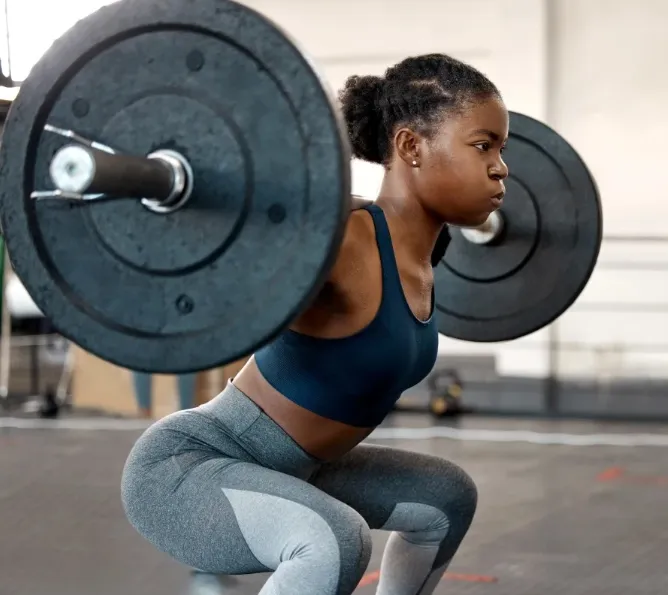
Every athlete eventually hits a performance plateau, wondering how to break through and take their training and racing to the next level. Questions like, “How do I get stronger? How do I run faster? How do I go further?” often arise. These athletes may find themselves stuck at the same strength levels, relying mostly on bodyweight exercises or light resistance. If they do attempt heavier weights, it may not be enough to spark real change in their body’s capacity for work.
One of the main obstacles athletes face is the confidence to lift heavier weights. This hesitation can significantly limit progress and prevent athletes from reaching their full potential. Here are five strategies that can help you boost your confidence and start lifting heavier with assurance.
1. Understand the Why Behind Strength Training
A crucial aspect of strength training is understanding the reasoning behind it. Why do we need to apply heavier loads? How do specific exercises help in achieving your goals? The answer lies in “progressive overload”—gradually increasing the resistance you work with to challenge your body beyond its current capacity. Over time, this helps the body adapt, grow stronger, and increase endurance.
Simply put, relying on bodyweight exercises alone won’t cut it if you want to meet your fitness goals. Your muscles, joints, and ligaments need to handle and generate significant force, especially when you’re pushing for higher performance. To safely achieve this, external weights are necessary, as they allow you to condition your body without overloading it with excessive volume. Lifting heavier weights under control, with good form and at lower reps, enables you to safely stress the body and allow it to recover and adapt effectively.
When defining “heavier weights,” aim for at least 25-50% of your body weight, with some exercises reaching 50-75%. Progressing within these parameters ensures you’re challenging your body without risking injury.
2. Prepare and Visualize
Never underestimate the importance of warming up before lifting heavier weights. At SFE, we ensure clients work through 2-3 warm-up sets before tackling their “working weight,” especially for compound movements like squats and deadlifts.
Warm-up sets not only help increase blood flow and flexibility but also reinforce proper technique and mentally prepare you for the heavier loads ahead. This is your opportunity to evaluate how you’re feeling that day—whether you’re ready to lift or need to adjust. Working with lighter loads during warm-ups (20-30% of your working weight) helps you visualize the movements and mentally rehearse lifting heavier weights.
This technique of “ghosting the bar” or performing bodyweight versions of loaded exercises ensures you’re in the right mindset and confident before adding more weight to your lifts.
3. Use Training Aids for Confidence
Training aids can provide the extra support needed to build confidence when lifting heavier weights. Simple tools like placing a box or bench behind you during barbell back squats can help ensure proper range of motion while also offering safety. Similarly, when performing single-leg deadlifts or Romanian deadlifts with heavy dumbbells, balance can be tricky at first. Using the wall for support or a suspension trainer can help stabilize you while still challenging the muscles.
These aids are meant to allow you to focus on the targeted muscles and build stability under load, giving you the confidence to lift without assistance once you’ve developed the strength and control needed.
4. Follow a Structured Plan
A well-structured training plan is crucial for gradual progression. Seeing your plan laid out will help you understand how your strength training is progressing. For example, noticing that just a few weeks ago you were lifting 5kg weights for 6 reps, and now you’re lifting 8kg for 8 reps shows visible progress. This helps reduce the intimidation factor when it’s time to increase weights further.
It’s also essential to remain flexible with your plan. If a certain exercise feels too easy, or if you’re struggling with the prescribed weights, don’t hesitate to adjust. Progress isn’t always linear, and having a coach or accountability partner can ensure you stay on track and adjust as necessary.
5. Don’t Be Afraid to Ask for Help
Asking for help might seem simple, but many athletes hesitate to do so. Whether you’re in a gym with a trainer or working alongside experienced training partners, don’t be afraid to ask for guidance. A knowledgeable coach can help identify areas where you’re struggling and suggest improvements. Getting constructive feedback can save you time and prevent unnecessary mistakes in your training.
Asking for help doesn’t mean you’re failing; it’s about learning and improving. Seeking advice from someone more experienced gives you the confidence to keep challenging yourself and developing your strength over time.
Conclusion
Building confidence to lift heavier weights is essential for athletes who want to break through performance plateaus and continue progressing. By understanding the purpose behind your training, properly preparing your body, using training aids, following a structured plan, and seeking guidance when needed, you’ll build the confidence to safely lift heavier loads and achieve your goals.