
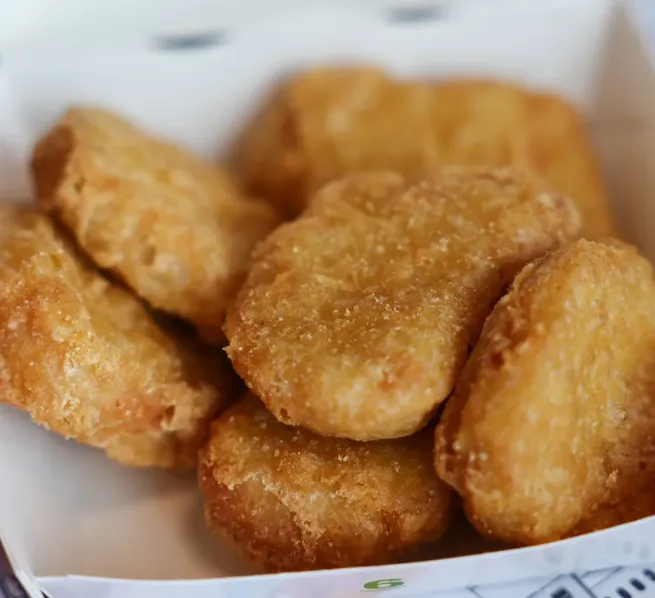
Chicken nuggets are a staple of fast food menus and home freezers, but few people stop to think about what’s inside them or how they’re produced. Behind their crispy coating and familiar flavor lies a story of industrial farming, questionable ingredients, and significant health and environmental concerns.
What’s in a Nugget?
At their core, chicken nuggets are made from chicken meat—but not always the parts you’d expect. While some nuggets use ground cuts of meat, many rely on something called “mechanically separated meat.” This process involves forcing the last scraps of flesh from bones using high pressure, creating a paste-like substance often referred to as “pink slime.” This mixture is then seasoned, shaped, breaded, and fried to give us the nuggets so many people crave.
The Life of a Factory-Farmed Chicken
The story of a nugget begins long before processing. Most chickens raised for meat live in massive industrial sheds that can hold tens of thousands of birds. Bred to grow unnaturally fast, their bodies often become too heavy for their developing bones, leading to painful leg injuries and heart failure. These birds are typically slaughtered at just six weeks old—still babies by natural standards.
Because they are kept in crowded, unhygienic conditions, chickens are routinely given antibiotics to prevent disease outbreaks. This practice contributes to the rise of antibiotic-resistant bacteria, which already causes millions of illnesses and tens of thousands of deaths each year.
Processing the Birds
Once chickens reach slaughter weight, they are transported—often in extreme weather conditions—to processing plants. Many arrive injured or stressed. At the plant, they are killed, bled, and scalded in hot water to loosen their feathers. After deboning, the leftover flesh is ground down and prepared for nugget production.
To make the meat appealing, manufacturers rely heavily on seasoning blends. Ironically, the flavor that makes nuggets so addictive comes less from the chicken itself and more from plant-based herbs, spices, and flavorings.
Health Concerns
Chicken nuggets may be convenient and tasty, but they’re far from a health food. Processed meats, including nuggets, are linked to a higher risk of colorectal cancer, according to the World Health Organization. Regular consumption of fried foods is also associated with obesity, type 2 diabetes, high blood pressure, and heart disease.
Beyond this, chicken is one of the most common carriers of foodborne pathogens such as salmonella and campylobacter, which sicken millions annually. Add to that the risk of antibiotic resistance fueled by industrial farming, and nuggets pose a serious public health concern.
Environmental Costs
Producing chicken nuggets comes with a heavy environmental toll. Industrial poultry farming contributes to deforestation, since much of the soy used in chicken feed is grown on cleared land. These farms also pollute water and air, while generating greenhouse gas emissions that far exceed plant-based alternatives. Compared to foods like tofu, chicken production creates multiple times more climate-warming emissions.
Animal Welfare Issues
Perhaps the most overlooked aspect of chicken nugget production is animal suffering. Life in a factory farm offers chickens no mental stimulation or space to move freely. Their shortened lives are marked by overcrowding, painful physical conditions, and a lack of basic care. Most people dislike the idea of factory farming, yet nearly every nugget sold on the market comes from this very system.
A Better Alternative
When you weigh the taste of chicken nuggets against the health, ethical, and environmental downsides, the scales tip heavily toward harm. The good news? You don’t have to give up nuggets to avoid these problems. Today, there are countless plant-based options that mimic the taste and crunch of traditional nuggets without the cruelty, pollution, or health risks.
Conclusion
Chicken nuggets may be marketed as a fun, tasty snack, but their hidden costs are hard to ignore. From animal welfare concerns to public health risks and environmental destruction, the true price is far higher than what you pay at the counter. Luckily, alternatives exist that let us enjoy the flavor we love while making choices that are better for our health, the planet, and the animals.