
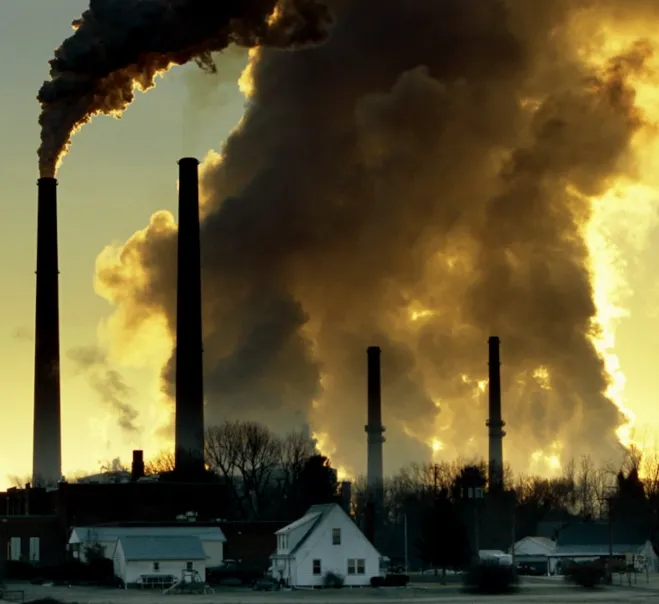
What Do We Mean by Air Pollution?
Air pollution occurs when harmful substances — whether chemical, biological, or physical — enter the atmosphere and alter its natural state. While some pollutants come from natural events like wildfires or volcanic eruptions, most are caused by human activity. The consequences reach far beyond dirty air; they threaten our health, ecosystems, and climate stability.
The Leading Causes of Air Pollution
1. Burning Fossil Fuels
Coal, oil, and gas remain the dominant sources of energy worldwide, but their combustion releases massive amounts of carbon dioxide and other harmful gases. Beyond fueling climate change, air pollution from fossil fuels is linked to millions of premature deaths annually.
2. Industrial Farming
Animal agriculture contributes significantly to poor air quality. Factory farms release over a hundred different gases, including methane, ammonia, and hydrogen sulfide. These emissions harm the environment, the workers exposed to them, and nearby communities where respiratory issues are more common.
3. Landfills
As organic waste decomposes, it emits methane, carbon dioxide, and other toxic gases. Beyond the stench, these emissions contribute to global warming and can trigger health problems such as headaches, nausea, and breathing difficulties.
4. Factories and Manufacturing Plants
Industrial operations discharge a wide range of pollutants, often while relying heavily on fossil fuels for power. This combination makes them one of the largest contributors to degraded air quality.
5. Mining
From dust clouds during excavation to toxic byproducts released during processing, mining pollutes at every stage. Hazardous particles like lead and arsenic can travel through the air, posing risks to respiratory health and triggering allergies.
6. Commercial Fishing Fleets
While less often discussed, fishing vessels are a major source of pollution. Studies suggest that bottom-trawling boats release carbon emissions on par with the aviation industry, showing how destructive industrial fishing can be.
7. Wildfires
Increasingly frequent and severe wildfires release massive amounts of carbon dioxide, carbon monoxide, and fine particulate matter. Smoke can spread across continents, worsening respiratory and cardiovascular problems. Alarmingly, intentional fires are still used in some regions to clear land for livestock production.
Key Air Pollutants to Be Aware Of
- Particulate Matter (PM2.5 and PM10): Tiny airborne particles that come from vehicles, factories, farming, and natural events like wildfires. Long-term exposure is linked to asthma, heart disease, and reduced lung function.
- Carbon Monoxide: A colorless, odorless gas produced by incomplete combustion. Even short-term exposure can cause dizziness and headaches; high levels can be fatal.
- Methane: Much of it comes from livestock farming. It is a potent greenhouse gas and a precursor to ground-level ozone, which damages lungs and crops.
- Ozone: Protective in the upper atmosphere but harmful near the ground. It is formed when pollutants from cars and factories react with sunlight, contributing to respiratory illness and premature death.
- Ammonia: Largely produced by livestock waste and fertilizers. It damages sensitive ecosystems and contributes to water pollution, while also causing eye and lung irritation.
- Nitrogen Dioxide: Commonly released from vehicle exhaust and power plants. It can trigger asthma attacks and combine with other chemicals to form more pollutants.
- Lead: Though reduced by the phase-out of leaded gasoline, industrial activities still release it. Once in the body, lead accumulates in bones and harms the nervous system, kidneys, and reproductive health.
- Sulfur Dioxide: Mostly from burning coal and oil. This acidic gas contributes to chronic respiratory conditions and forms acid rain, devastating forests and waterways.
The Consequences of Dirty Air
Air pollution impacts nearly every aspect of life:
- Climate Change: Greenhouse gases from fossil fuels and agriculture intensify global warming.
- Smog and Soot: Ground-level ozone and soot particles clog cities, worsening lung disease.
- Indoor Pollutants: Mold growth in damp spaces can cause serious respiratory problems.
- Acid Rain: Formed from sulfur and nitrogen emissions, acid rain harms crops, forests, and aquatic life.
- Eutrophication: Excess nitrogen and sulfur end up in water, fueling algae blooms that suffocate marine ecosystems.
- Wildlife Decline: Polluted air damages plants and animals alike, disrupting entire ecosystems.
- Human Disease: Strokes, cancers, asthma, heart disease, dementia, and diabetes are all linked to long-term air pollution exposure.
What Can We Do About It?
The problem may seem overwhelming, but solutions are within reach if we commit to collective action:
- Shift to plant-based diets, reducing demand for animal agriculture and its massive emissions.
- Cut reliance on industrial fishing, opting instead for plant-based sources of omega-3s.
- Use public transport or cycle instead of driving whenever possible.
- Support renewable energy like wind and solar over fossil fuels.
- Practice energy conservation at home by switching off unused devices, lowering heating use, and improving insulation.
- Buy fewer new products and focus on repairing, reusing, and recycling.
Closing Thoughts
Air pollution is not just an environmental issue; it is a public health crisis and a driver of climate breakdown. While industries profit from practices that poison the air, individuals can take meaningful steps to reduce their impact. Cleaner air means healthier people, thriving wildlife, and a more stable climate — outcomes worth fighting for.